Probably not on a particular day.
It happens so gradually that most of us never notice it. The floor becomes a chair. The chair becomes a couch. The squat becomes a toilet. The mat becomes a raised bed. The walk becomes a car. The kneeling position becomes a stool or a tool that lets us avoid kneeling altogether.
Convenience is useful. But every convenience also removes a demand.
Children spend enormous amounts of time changing levels. They are down, up, sideways, crawling, squatting, rolling, sitting, kneeling, reaching, falling, and recovering. Adult life does the opposite. It organizes the environment so we can remain at roughly the same height all day.
That matters because the body does not preserve every possible movement simply because it once knew how to do it. Strength, balance, coordination and comfortable joint range remain available partly because we keep asking for them.
Furniture supports us. Sometimes it supports us so well that our bodies stop having to support themselves.
Stephen's story
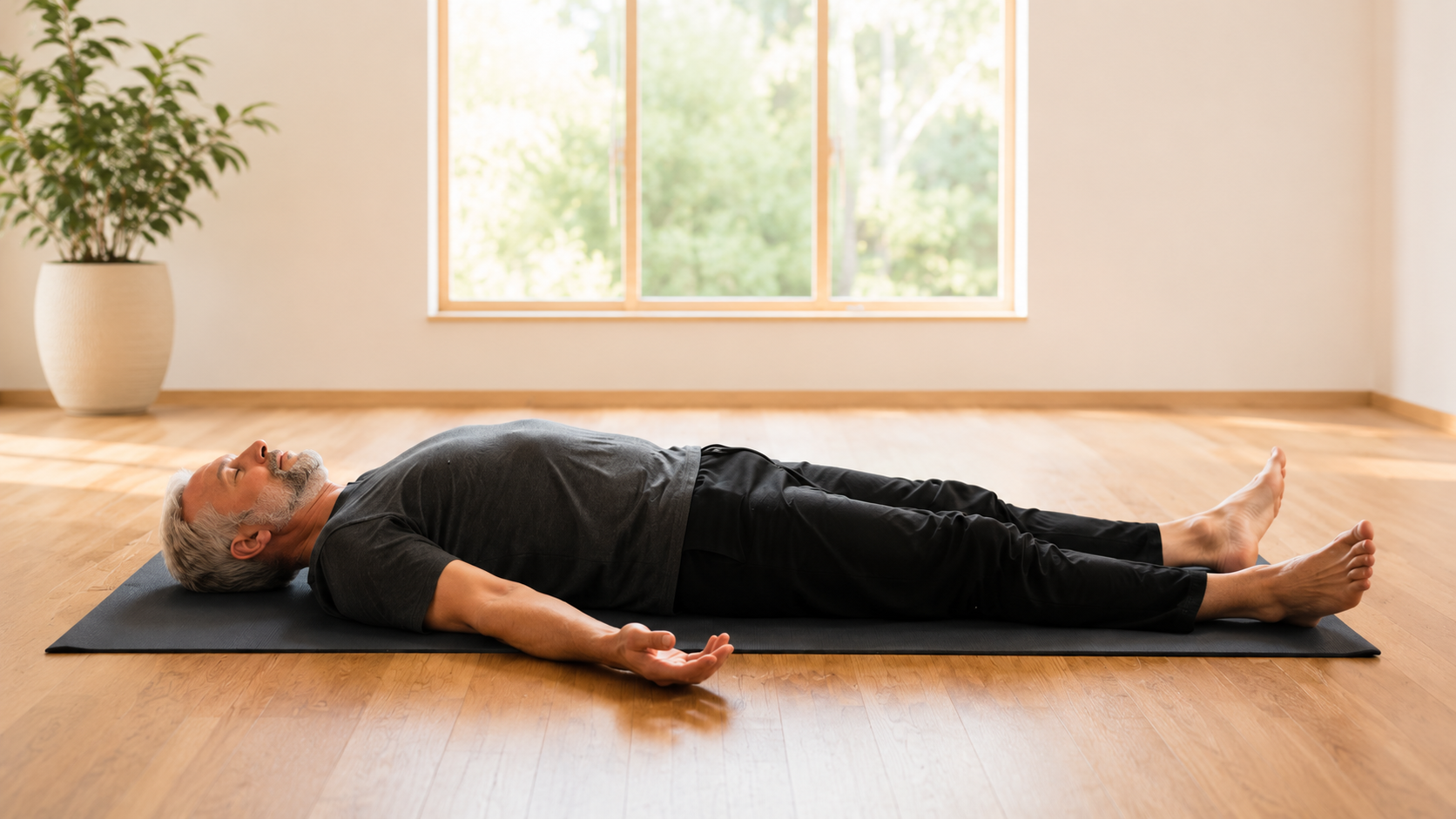
When I first started healing my own body and back, I changed the room around me. I gave away my coffee table. I got rid of the rug. I cleared out the living room. I put mirrors on the wall and black-and-white pictures of yogis from a beautiful book I had found.
My yoga mat and my BackHealer balls lived on the floor. For about eight years, that floor was where I worked on my body every day.
Looking back, I realize I had done something more important than simply creating a place to exercise. I had changed the environment so that working with my body became the normal thing to do.
The room itself kept asking me to participate.
That is one of the reasons environment matters so much. If everything around us is designed to remove bending, kneeling, reaching, carrying and changing levels, it becomes incredibly easy to lose those capacities without ever making a conscious decision to give them up.
The floor is always there. The question is whether your body still has a relationship with it.