Most people treat collagen as a powder. You buy a tub, stir in a scoop, and hope your skin, joints, and back take the hint. Sometimes they do. Often they do not, because collagen is not one thing you take. It is something your body builds, and building it takes more than raw material.
It takes five things working together. The last two Sundays covered two of them without saying so. Red light was one. Sugar was another. This week puts the whole system together, including the parts the collagen marketing leaves out.
What collagen actually is
Collagen is the main structural protein in the body. An adult of about 70 kg carries roughly 3,700 g of it, around 1,600 g of that in bone, with large amounts in cartilage, muscle, and skin.1 It is also the framework of fascia, tendon, ligament, and the outer ring of every spinal disc.
Each collagen molecule is three protein strands wound tightly around each other. For the strands to wind that tightly, the smallest amino acid, glycine, has to sit at every third position. And for the finished strands to lock together, the body needs vitamin C. Without it, the chemistry that stabilises the helix cannot happen, and the collagen that forms is weaker.
The five parts
- Building blocks
Glycine, proline, and hydroxyproline. Collagen peptides and glycine supply them in amounts ordinary protein does not.
- The cofactor
Vitamin C. Required to lock the strands. Not optional.
- The signal
Movement and load. This tells the body where new collagen is needed.
- The light
Red and near-infrared light, which last week's article showed improving collagen density in skin.
- The protection
Keeping sugar from damaging the collagen you already have. More on that below.
Take away any one of these and the others work less well. A scoop of collagen with no vitamin C and no movement is half a job at best.
What renews, and what does not
This is the part most collagen marketing skips. Some collagen in the body barely renews at all.
Researchers used carbon-14 left in the atmosphere by nuclear testing in the 1950s and 60s to date the collagen in human tissue. The core of the Achilles tendon carried the carbon levels of the first 17 years of life. It is laid down while you grow and essentially not replaced after that.2 Adult cartilage showed the same pattern: very little turnover, healthy or arthritic.3
But injured tendon told a different story. In painful, damaged Achilles tendons, a substantial amount of the collagen had been renewed, some of it for years before symptoms appeared.4
Collagen will not rebuild the core of a tendon. It supports the tissue that is still turning over, and the tissue that is trying to repair.
Skin, bone, fascia, and the outer layers of connective tissue do keep turning over. So does anything actively healing. That is where the building blocks, the cofactor, and the signal matter.
The glycine gap
Glycine is officially classed as non-essential, because the body can make it. Spanish biochemist Enrique Meléndez-Hevia and colleagues ran the numbers and challenged that.
About 3 g made, 1.5 to 3 g eaten, up to 10 g short
Their calculation: the body produces about 3 g of glycine a day and a typical diet adds 1.5 to 3 g, which may fall around 10 g a day short of what is needed, much of it for collagen.1
They concluded glycine is really semi-essential and should be supplemented.1 Be clear about what this is: a metabolic calculation, not a clinical trial. But it explains why collagen, which is about one third glycine, can make a difference that ordinary protein does not.
Glycine is also a calming neurotransmitter in the spinal cord. That is why I take it at night, separately from collagen. More on that below.
Take it before you move
In a study from Keith Baar's lab, volunteers skipped rope for six minutes at a time over three days. On a placebo, a blood marker of new collagen production rose by about 54 percent. When they took 15 g of gelatin with vitamin C an hour before, it rose by 153 percent, and that doubling held for the full 72 hours.5 The collagen building blocks peaked in the blood about an hour after the dose.5
The limits are real. It was eight healthy men, and the marker shows collagen being made, not fewer injuries or faster recovery. But the principle is sound, and it has since been repeated: the building blocks need to be in the blood when the tissue gets the signal to use them.
So I take collagen with vitamin C 30 to 45 minutes before a walk or a movement session. Substrate plus loading. One without the other is half the intervention.
Sugar stiffens the collagen you already have
Two weeks ago the subject was sugar, cortisol, and the crash cycle. Here is what sugar does to connective tissue.
When sugar sits in the blood, it bonds to collagen without any enzyme involved, forming what are called advanced glycation end products. These create cross-links between collagen fibres that make tissue stiffer and less flexible. Worse, the damaged collagen resists being broken down, so it is not cleared and replaced with new collagen.6
Discs are especially exposed, because they are collagen-rich and turn over slowly. In mice, a diet high in these compounds led to them building up in the discs and made the discs measurably stiffer, with the strongest effect in females.7 That is an animal study. But it fits everything else here.
This is why the three pieces connect. Steadier blood sugar protects the collagen you have. Red light and movement signal the body to make more. Collagen, glycine, and vitamin C give it what it needs to do it.
The skin question
Most collagen is sold on skin, so it is worth being straight about the evidence.
A 2023 review of 26 trials and 1,721 people found collagen significantly improved skin hydration and elasticity compared with placebo.8 Then a 2025 review split 23 trials by who paid for them. The studies without pharmaceutical funding showed no effect on hydration, elasticity, or wrinkles. Only the funded ones did.9 The collagen industry responded that it pays for 50 to 70 percent of all supplement research, and that some of those studies were placed in the wrong funding category.10
The honest read: the skin case is unsettled. The stronger reason to take collagen is connective tissue, paired with movement, which is where the mechanism is clearest.
The three I take
These are the three I use. Each one does a different job, and each has a full science brief on foodforbackpain.com.
These are affiliate links. If you buy through them, Self Care Sunday earns a small commission at no extra cost to you. Amazon will show you the version sold in your region.
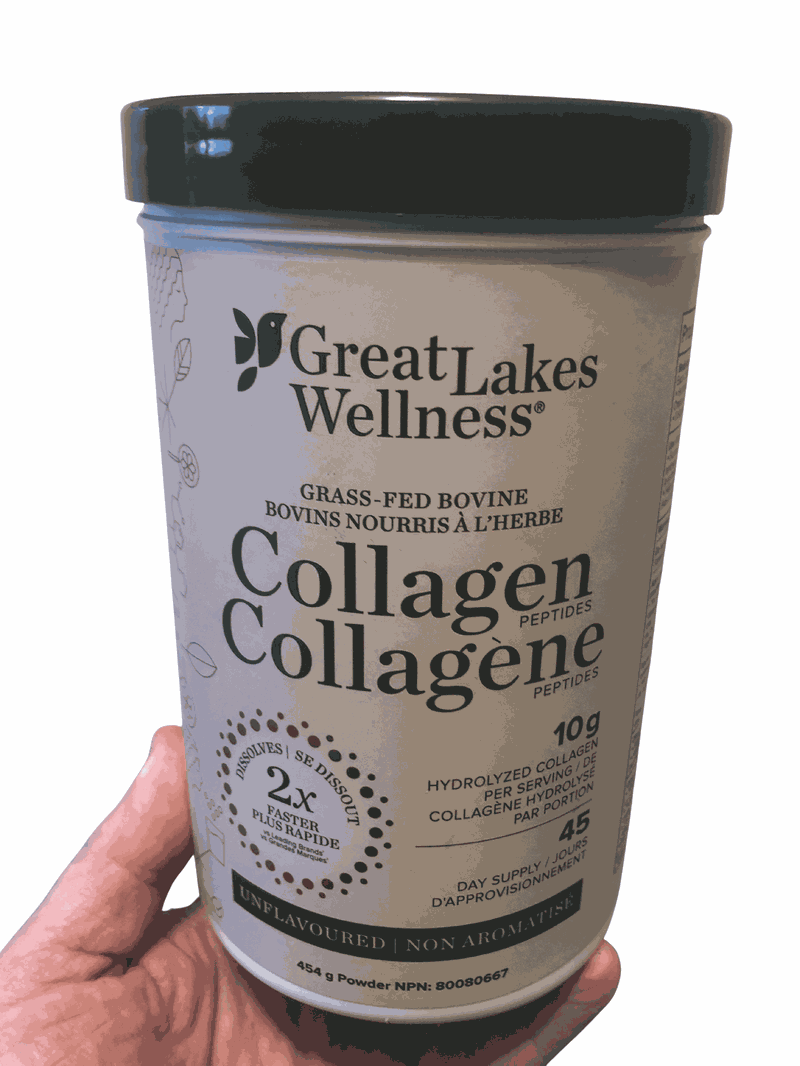
Collagen peptides
Grass-fed bovine, hydrolysed, unflavoured, 10 g per serving. It supplies glycine, proline, and hydroxyproline, the amino acids concentrated in fascia, tendon, and disc. Neutral taste, mixes into anything.
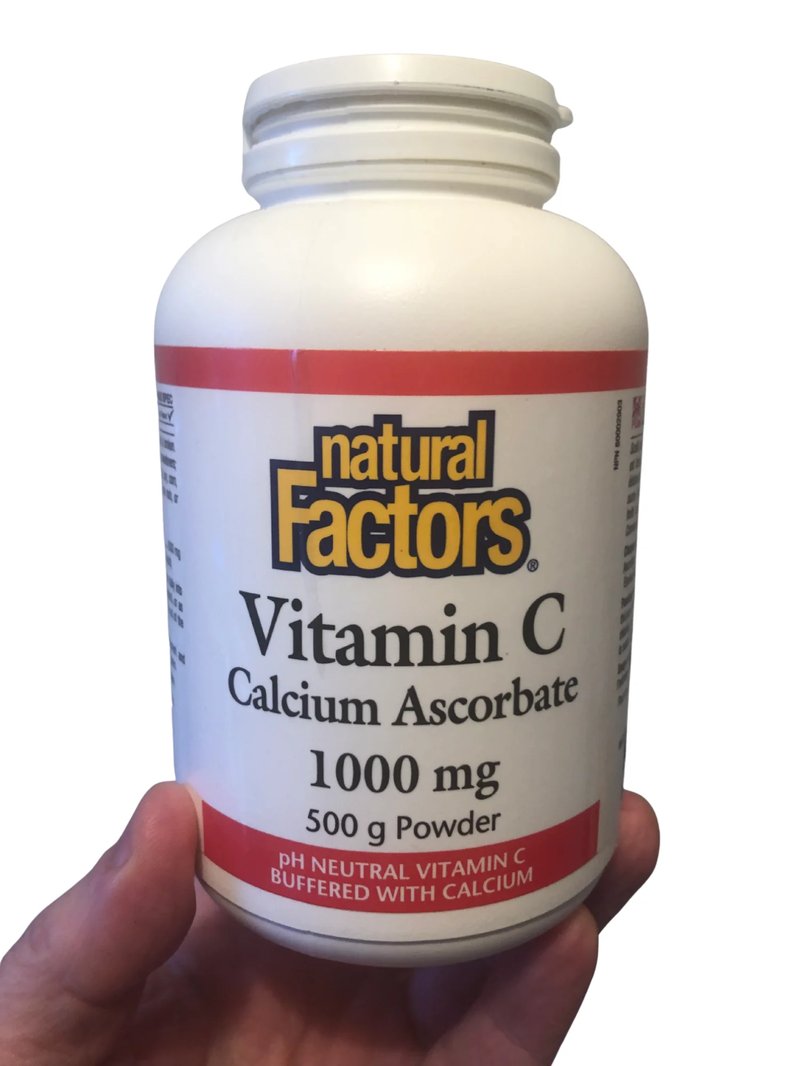
Vitamin C (calcium ascorbate)
Required for collagen to form properly. Without it, the cross-links cannot form and the fibres are weaker. The calcium ascorbate form is buffered, so it is gentler on digestion than plain ascorbic acid for daily use.
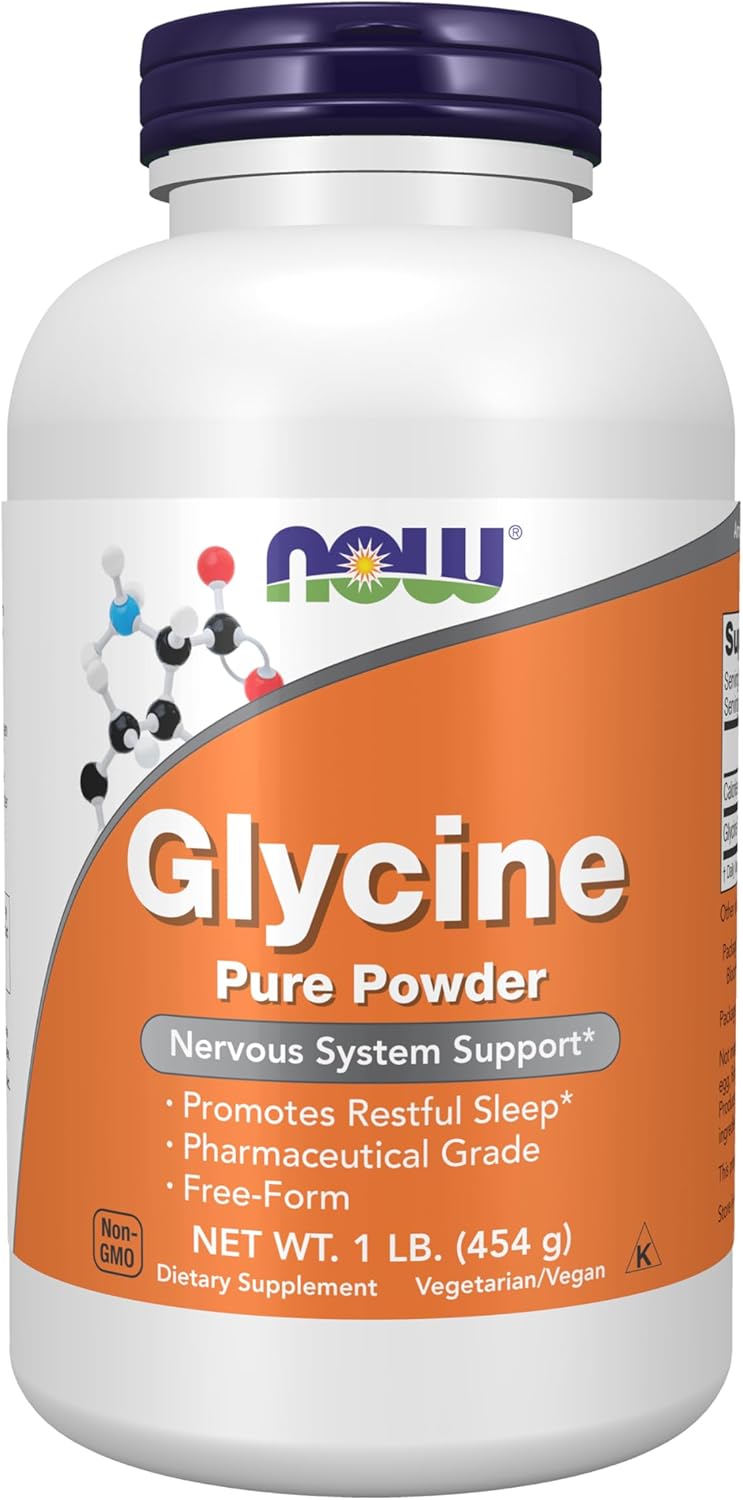
Glycine (pure powder)
The amino acid at every third position of the collagen helix, and the one the body may be most short of. It is also a calming neurotransmitter, which makes it useful at night. Mildly sweet and dissolves easily.
A simple day
-
Morning
Collagen and vitamin C together. Then, 30 to 45 minutes later, walk or move.
-
Through the day
Keep blood sugar steady, so the collagen you have stays flexible. Here is how.
-
Night
Glycine in water before bed.
The Morning Monster Mash
These three come from a bigger protocol. The Morning Monster Mash on foodforbackpain.com is sixteen targeted foods and supplements built for connective tissue, nerves, and recovery, with a science brief behind every ingredient and a warm bowl that makes it easy to do daily.
See the Monster MashWorth knowing
- Collagen is not a complete protein. It is missing tryptophan, so it adds to your protein, it does not replace it.
- Check with your doctor first if you have kidney disease or a history of kidney stones, are pregnant or breastfeeding, or take prescription medication.
- Start small. If something does not agree with you, reduce it or stop.
Collagen is not a scoop. It is a system: the right materials, the cofactor, the signal, the light, and protection from what breaks it down. Put the pieces together and each one works harder.
See you next Sunday.
Before you buy a tub
Doesn't collagen just get digested into amino acids?
Mostly, and that is the point. Collagen supplies glycine, proline, and hydroxyproline in amounts ordinary protein does not. In the gelatin study, those collagen building blocks peaked in the blood about an hour after taking it.
Is collagen a complete protein?
No. Collagen is missing the essential amino acid tryptophan, so it does not replace your regular protein. It adds to it.
Bovine or marine collagen?
The research does not clearly favour one source. In a large review, the source of collagen made no significant difference to skin elasticity.8 Choose on quality, taste, and what agrees with you.
Can I get this from food?
Yes. Bone broth, gelatin, slow-cooked cuts with connective tissue, and skin-on poultry all supply collagen. Vitamin C comes from citrus, peppers, kiwi, and berries. Supplements make it consistent and easy to time before movement.
How long before I notice anything?
Connective tissue changes slowly. Skin trials typically run around 12 weeks. Think in months, not days, and pair it with regular movement.
Are these suitable for vegetarians?
Glycine and vitamin C are. Collagen peptides come from animal sources. Glycine alone still supplies the amino acid the body is most short of for collagen.
Sources
- Meléndez-Hevia E, de Paz-Lugo P, Cornish-Bowden A, Cárdenas ML. A weak link in metabolism: the metabolic capacity for glycine biosynthesis does not satisfy the need for collagen synthesis. Journal of Biosciences, 2009. Body collagen figures as summarised in de Paz-Lugo et al., BioSystems, 2023. gwern.net · sciencedirect.com
- Heinemeier KM, Schjerling P, Heinemeier J, Magnusson SP, Kjaer M. Lack of tissue renewal in human adult Achilles tendon is revealed by nuclear bomb 14C. FASEB Journal, 2013. pubmed.ncbi.nlm.nih.gov
- Heinemeier KM, et al. Radiocarbon dating reveals minimal collagen turnover in both healthy and osteoarthritic human cartilage. Science Translational Medicine, 2016. science.org
- Heinemeier KM, et al. Carbon-14 bomb pulse dating shows that tendinopathy is preceded by years of abnormally high collagen turnover. FASEB Journal, 2018. pubmed.ncbi.nlm.nih.gov
- Shaw GC, Lee-Barthel A, Ross ML, Wang B, Baar K. Vitamin C-enriched gelatin supplementation before intermittent activity augments collagen synthesis. American Journal of Clinical Nutrition, 2017. sciencedirect.com
- Gkogkolou P, Böhm M. Advanced glycation end products: key players in skin aging? Dermato-Endocrinology, 2012. pmc.ncbi.nlm.nih.gov
- Dietary advanced glycation end-product consumption leads to mechanical stiffening of murine intervertebral discs. ncbi.nlm.nih.gov
- Pu SY, Huang YL, Pu CM, et al. Effects of oral collagen for skin anti-aging: a systematic review and meta-analysis. Nutrients, 2023. pubmed.ncbi.nlm.nih.gov
- Myung SK, Park Y. Effects of collagen supplements on skin aging: a systematic review and meta-analysis of randomized controlled trials. American Journal of Medicine, 2025. amjmed.com
- Collagen Stewardship Alliance. Statement on the 2025 collagen meta-analysis. collagenalliance.org